
Local History · From Sharon Township
The 11,000-year-old Clovis camp in a Sharon Township hayfield
A plowed field near Sharon Center produced more than 10,000 Clovis-era spear points. About 80% were made from stone that only outcrops 500 miles south.
About a mile northwest of the Sharon Center traffic circle, a local artist named James D. Remington was walking a freshly plowed field. He spotted worked stone. He picked one up. He picked up more. The field kept producing them.1
Between 1990 and 1993, the Cleveland Museum of Natural History excavated the site under Dr. David Brose, then Curator of Archaeology. They recovered more than 10,000 stone tools. The tools were Clovis-culture, the earliest widespread technology in North American archaeology.2
Roughly 80% of the tools were made from Wyandotte chert. Wyandotte chert only outcrops in a specific stretch of the Ohio River valley in southern Indiana, about 500 miles away.3 That single fact rewrote what archaeologists thought about how early hunter-gatherers moved and traded across the continent.
The original radiocarbon dates from charcoal in refuse pits at the site came back at 10,980 years before present, plus or minus 75 years. In popular reporting the figure often gets rounded to 13,000.4
There is also a live scientific argument attached to the site. The original excavators interpreted a set of post-mold stains as evidence of a small shelter, roughly 150 square feet, and suggested it might be the oldest confirmed structure in North America. A re-investigation by researchers at Kent State and Southern Methodist University between 2016 and 2018 (Metin Eren and David Meltzer, among others) concluded that one of the “post molds” was actually a root stain, another was a mapping error, and that all previously reported ages should be treated as unverified pending new work.5
The site was listed on the National Register of Historic Places on July 30, 1992. It sits on private land today. The Cleveland Museum of Natural History still curates the artifacts.
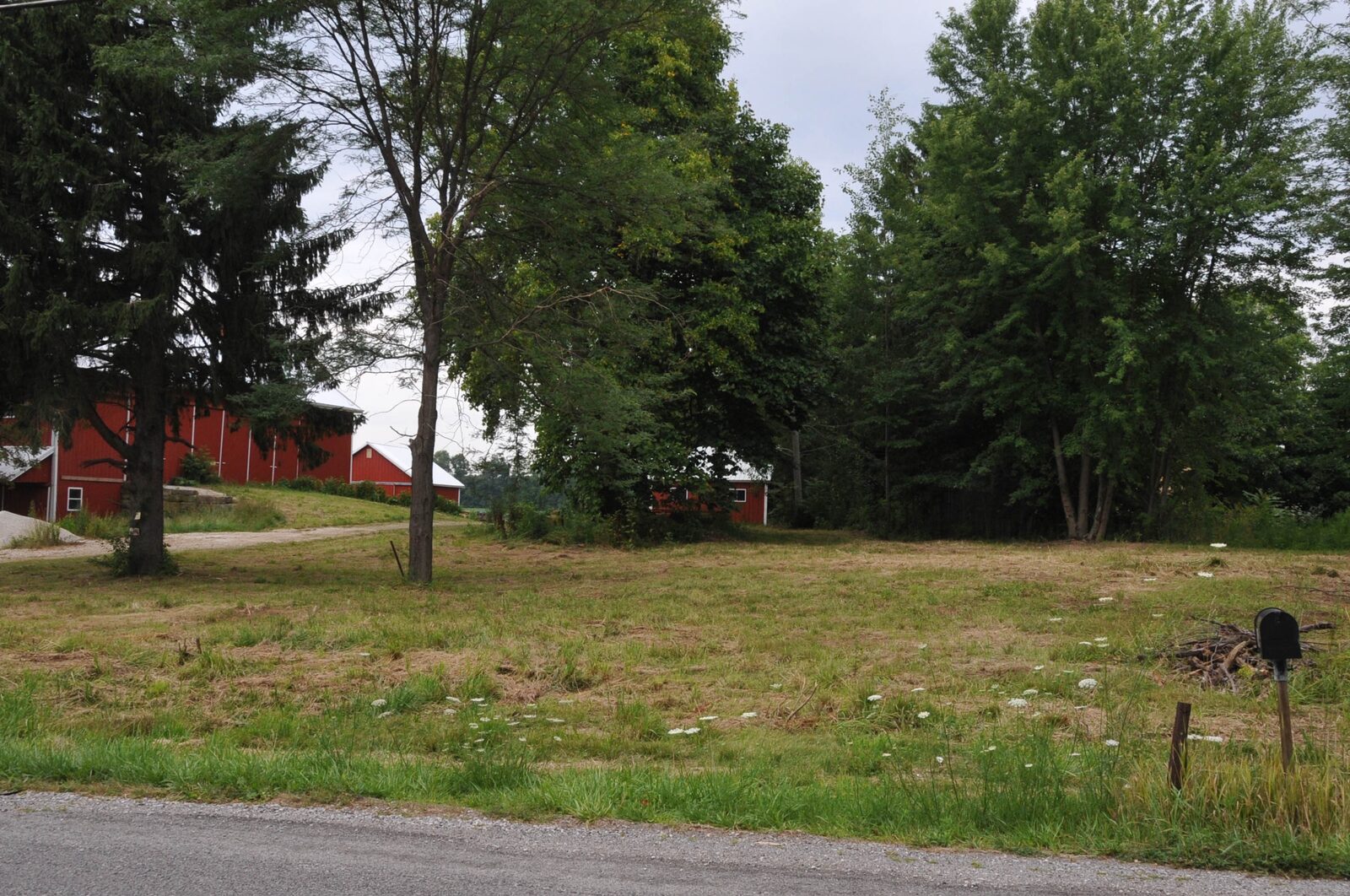
The ridge is quiet. The hayfield is a hayfield. Ten thousand years of foot traffic, and no marker at the road.
Footnotes
- Discovery by James D. Remington on a plowed field. Documented in the Cleveland Museum of Natural History's Science Blog and in the Wikipedia entry on the Paleo Crossing site.
- 1990-1993 CMNH excavation under Dr. David Brose; 10,000+ Clovis tools. Same sources; Brose's role documented in the CMNH blog.
- ~80% of tools from Wyandotte chert, southern Indiana, ~500 miles away. Confirmed by neutron activation analysis published in the Journal of Archaeological Science, 2014, and summarized in CMNH materials.
- Radiocarbon age 10,980 ± 75 years BP. Original date from CMNH excavation. Some popular sources have rounded this to 13,000 years; the 2021 re-analysis (Eren et al., Journal of Field Archaeology) concluded the site's age should be treated as pending new dating.
- “Oldest house in North America” claim and its re-investigation. The initial interpretation was published by the CMNH team; the challenge came from Metin Eren (Kent State) and David Meltzer (SMU) in a 2021 Journal of Field Archaeology paper. Brad Lepper of the Ohio History Connection has publicly stated the “oldest house in America” claim is not supported.
Sources
- Wikipedia, “Paleo Crossing site.” en.wikipedia.org
- Cleveland Museum of Natural History, “Paleo Crossing: Clues to Ohio's Earliest Residents,” May 11, 2015. cmnh.org
- Cleveland Museum of Natural History, exhibit page. cmnh.org
- Ancient Pages, “Is North America's Oldest House In Ohio…,” April 28, 2022. ancientpages.com
- Eren et al., “On the Presumed Clovis-Age Structure at the Paleo Crossing Site, Ohio,” Journal of Field Archaeology 47(1). tandfonline.com
The site's National Register listing, the artifact count, the Wyandotte chert provenance, and the excavation team's identity are all documented in multiple independent sources. The age of the site itself is under active re-investigation; the story reflects that.