
Local History · From Granger Township
Four farmers, one mortgage, and the land they lost back to the man Granger was named for
In October 1817, four New York farmers rode out in a two-horse carriage and bought three-quarters of Granger Township. Then Congress opened cheaper federal land south of the Reserve.
In October 1817, four farmers left Bristol, in Ontario County, New York, and rode out to the Western Reserve in a carriage drawn by two horses.1 Their names were James Ganyard, Elizur Hills, Anthony Low, and Burt Codding. Their business was land.
They stopped at the cabin of Ezekiel Mott, a squatter who had put up the first structure in the township the year before, on the ground now known as Lot 2. Then they made a deal. They bought three-quarters of the entire township from Gideon Granger of Suffield, Connecticut, for four dollars an acre. They sold their New York farms to Granger in part payment. They signed a joint mortgage bond of more than fourteen thousand dollars on the Ohio land.2
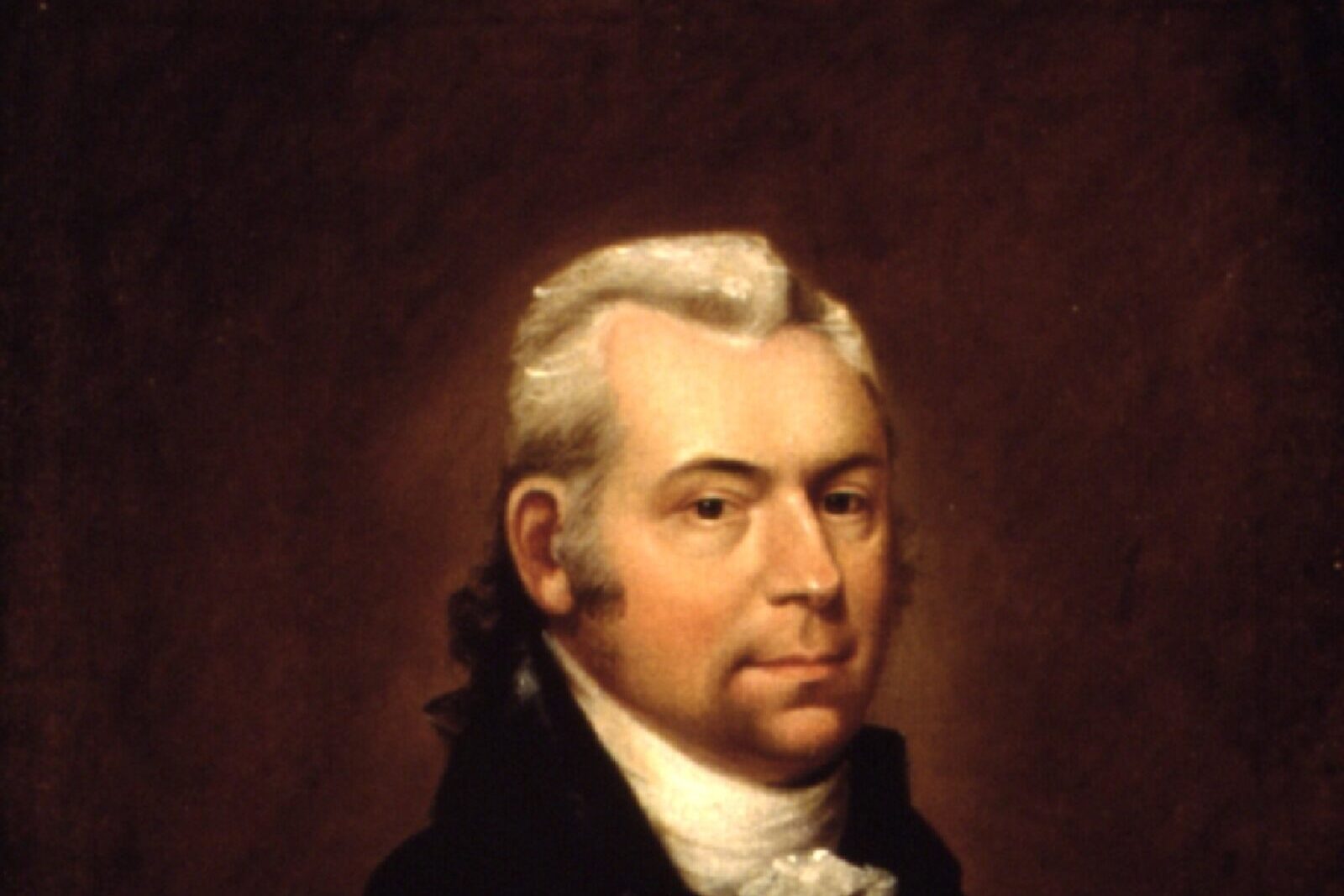
Gideon Granger was Postmaster General of the United States under Jefferson and Madison. He had been given first refusal on the tract when its previous absentee owner, Oliver Phelps of the Connecticut Land Company, went insolvent.3 Granger, back in Connecticut, had never seen the ground.
The first emigrant train arrived in mid-March 1818, hauled in by ox sled: Elizur Hills with his sisters Abigail and Marilla, Elizur Wolcott, John Codding with wife and one child, Festus and James Ganyard, Seth and Richard Paull with their families, and Seth Dye and his wife. That was the founding population.4
Then Congress opened federal lands south of the Western Reserve at less than half the price the Granger buyers had paid. Immigration bypassed the township. The families could not sell their surplus acres. The mortgages came due. Perrin's 1881 county history puts it as plainly as it can be put: "In the course of a few years, the mortgages became due. The owners were unable to meet the obligations, and their lands and possessions reverted to the former proprietor."5
When the township organized in February 1820, it held its first election at the house of Seth Paull. The trustees voted on a name. The options were Berlin, Ontario, Codding, or Granger. They chose Granger, in honor of the man in Connecticut who owned most of the ground they had just cleared. The first money that came into the township treasury was a twenty-five-cent fine imposed for swearing. Half went to buy paper for the record book. The other half paid William Paull for bringing the state laws from the county seat.6
Some of the founding families kept enough land to stay and build. Elizur Hills's son Stacy became a country doctor and built the 1840s Western Reserve farmhouse now called the Thompson-Work Museum House on Granger Road, which the Granger Historical Society still opens for tours. Their surnames are on the road signs, in the cemeteries at Coddingville and Granger Fairview, and on the doors of every neighbor whose house sits on a plot that once belonged to them.
The name on the township itself belongs to the man in Connecticut.
Footnotes
- The October 1817 scouting trip. Perrin's 1881 History of Medina County and Ohio (Chapter XXII, pp. 637–638) records the trip in October 1817. Northrop's earlier 1861 Pioneer History of Medina County gives October 1815; the Granger Historical Society follows Perrin's 1817 date. Both sources are named eyewitness-close: Perrin's Granger chapter is contributed by Charles Neil and draws heavily on a paper by Hon. Myron A. Hills read before the Granger Pioneer Society.
- Three-quarters of the township at $4 per acre, $14,000+ mortgage. Perrin 1881, p. 637: “bought three-fourths of the township, at $4 per acre… sold their farms in Ontario County to Mr. Granger, in part payment, and together gave a mortgage bond, amounting to over $14,000, on the new lands in Ohio.”
- Oliver Phelps insolvency, land transfer to Granger. The 1795 Connecticut Land Company distribution assigned Township 3, Range 13 to Phelps. Perrin and the Granger Historical Society both record the transfer of the tract to Granger to settle Phelps's debts. Some sources give Phelps as dying in 1809; the point stands either way.
- March 1818 first emigrant train. Perrin 1881, p. 638 lists the arrivals by name and family group. This is contemporary-with-living-memory reporting.
- Federal land opening and the reversion to Granger. Perrin 1881, pp. 637–638. The story reproduces Perrin's own phrasing.
- Township organization, name vote, and the swearing fine. Perrin 1881, p. 645. First trustees: N. A. Goodwin, S. Paull, Festus Ganyard; Clerk John Codding; Justice of the Peace Burt Codding. The naming vote and the 25-cent fine are both recorded in Perrin's Granger chapter.
Sources
- W. H. Perrin, J. H. Battle, & W. A. Goodspeed, History of Medina County and Ohio (Chicago: Baskin & Battey, 1881), Chapter XXII (Granger Township), pp. 630–647. Public domain. archive.org
- N. B. Northrop, Pioneer History of Medina County (Medina, OH: Geo. Redway, 1861), Granger section pp. 66–80. Public domain. archive.org
- Granger Historical Society, “Learn — Granger History 101.” grangerhist.org/learn
- Granger Historical Society, “Tour” (Thompson-Work Museum House at 1261 Granger Rd.). grangerhist.org/tour
- Wikipedia, “Gideon Granger” (biographical dates and office). en.wikipedia.org
- USGenWeb Archives, Medina Co. Tombstone Photo Project (Coddingville and Granger Fairview Cemeteries). medina.ohgenweb.org
Every named person, dollar figure, and date comes from Perrin (1881) or Northrop (1861), the two independent 19th-century compendia of Medina County history. Both are public domain and digitized in full at the Internet Archive.