
Local History · From Wadsworth Township
The Pennsylvania Dutch farm belt around Wadsworth
In the 1830s, Pennsylvania Dutch settlers arrived in Wadsworth and sorted themselves out from the earlier Yankee arrivals. The two groups didn't mix. The pattern still shows on the map.
Wadsworth Township's first settlers were Yankees. On March 1, 1814, Benjamin Dean felled the first tree ever cut by a settler in the township, in what became known as Western Star, on the eastern edge. He was from Vermont, along with his father Daniel, his brother Daniel Jr., and Oliver Durham. Alonzo Durham, born in July 1814, was the first child born in the township.1
Then, beginning in the 1830s, a second wave arrived: Pennsylvania Dutch families of Mennonite and Lutheran descent, moving up from Pennsylvania. The City of Wadsworth's own history page puts it directly: “At one time, the entire area surrounding the central village of Wadsworth was inhabited by Pennsylvania Dutch.”2
The two groups did not mix. There was a specific historical reason. Their families had fought each other, or their parents had, in the Yankee-Pennamite Wars — a series of Connecticut-versus-Pennsylvania land disputes in the Wyoming Valley of Pennsylvania that started in 1753 and escalated in the 1770s. Wadsworth's official history states plainly that “marriage between the two groups in Wadsworth was considered a mixed marriage.”3
Wadsworth's history page also notes: “Wadsworth is unique in that it is the only area where the Pennsylvania Dutch settled where the Yankees were already established.”4
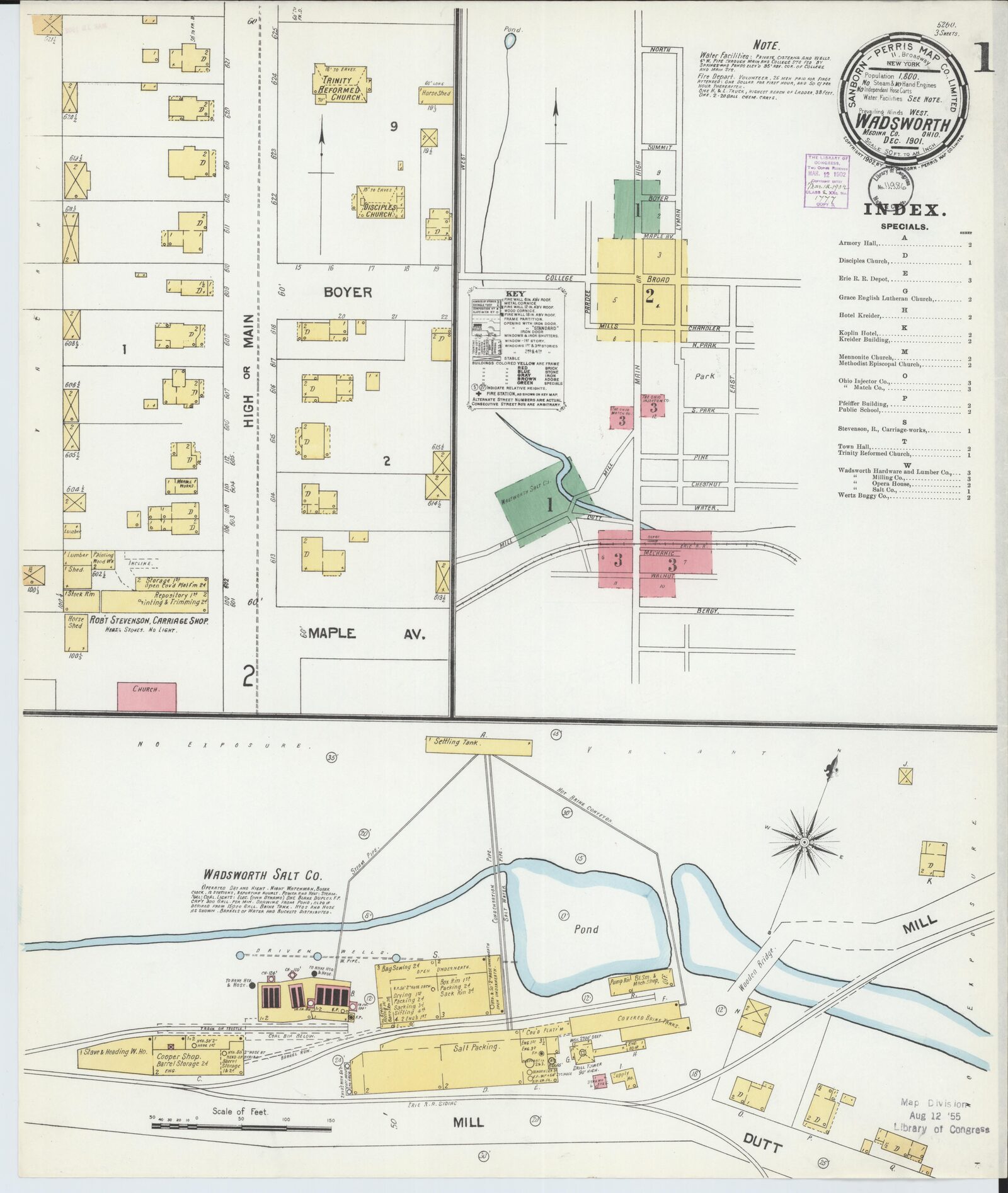
Over time, the two groups worked out a geographic settlement of their own. The Pennsylvania Dutch farmed the outlying township land. The Yankees stayed in the central village as professionals and merchants. That sort still shows on the map. The city of Wadsworth today, incorporated later, is the old Yankee center. The rural township that wraps around it is the old Pennsylvania Dutch farm belt.5
Early German-language services were still held in local Mennonite and Lutheran churches. The Wadsworth Area Historical Society is the local authority on which specific 19th-century rural farmhouses and meeting houses still stand.
Footnotes
- March 1, 1814 first tree at Western Star. Documented on wadsworthcity.com's Early History page and cross-verified in the Wadsworth Memorial compiled by Edward Brown for the 1875 sixtieth-anniversary celebration.
- 1830s Pennsylvania Dutch arrival. Direct quote from wadsworthcity.com's Early History page.
- “Mixed marriage” and Yankee-Pennamite Wars origin. Same wadsworthcity.com source. The Wyoming Valley conflicts started 1753 and are documented in the Wikipedia entry on the Pennamite-Yankee Wars.
- Wadsworth as the only overlap area. Direct quote from wadsworthcity.com's Early History page.
- Township versus city geographic sort. Whitsett & Wall's brief history of Wadsworth and wadsworthcity.com both describe the settlement pattern.
Sources
- City of Wadsworth, Early History. wadsworthcity.com
- Whitsett & Wall, A Brief History of Wadsworth. whitsettandwall.com
- Wadsworth Memorial (Edward Brown, compiler, 1875), Library of Congress. loc.gov
- Wikipedia, Pennamite-Yankee Wars. en.wikipedia.org
- Perrin, W.H., Battle, J.H., & Goodspeed, W.A., History of Medina County and Ohio (1881), Chapter X (Wadsworth Township), p. 435. archive.org
The city/township geographic split visible on any modern Wadsworth map traces to a real historical sorting process between two settler groups who did not intermarry. The Wadsworth Area Historical Society at 330-336-5548 holds the deeper record.